

The exploration of the crystal structure of 1 - Azaindene is a fascinating journey that combines the realms of organic chemistry and materials science. As a leading supplier of 1 - Azaindene, we are deeply involved in the study and production of this unique compound, and we are excited to share our knowledge about its crystal structure.
Molecular Overview of 1 - Azaindene
1 - Azaindene is a heterocyclic compound that contains a nitrogen atom within its fused - ring system. The basic structure consists of a five - membered ring and a six - membered ring, with the nitrogen atom located at the 1 - position of the molecule. This nitrogen atom not only affects the electronic properties of the compound but also plays a crucial role in its crystal packing.
The chemical formula of 1 - Azaindene is (C_8H_7N). Its molecular weight is approximately 117.15 g/mol. The presence of the nitrogen atom introduces a dipole moment into the molecule, which can have significant implications for the intermolecular forces and, consequently, the crystal structure.
Factors Influencing the Crystal Structure
Intermolecular Forces
The most prominent intermolecular forces in 1 - Azaindene are hydrogen bonding, dipole - dipole interactions, and van der Waals forces. The nitrogen atom in 1 - Azaindene can act as a hydrogen - bond acceptor. Although 1 - Azaindene does not have a hydrogen atom directly attached to the nitrogen in a typical hydrogen - bonding donor sense, in the presence of other molecules with suitable hydrogen - bonding donors, such as water or alcohols, hydrogen bonding can occur.
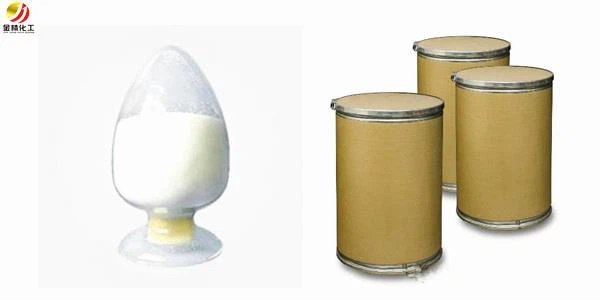
Dipole - dipole interactions arise due to the permanent dipole moment of the 1 - Azaindene molecule. The electronegative nitrogen atom attracts electron density, creating a partial negative charge on the nitrogen and partial positive charges on the adjacent atoms. These dipoles can interact with each other, leading to an ordered arrangement in the crystal lattice.

Van der Waals forces, including London dispersion forces, also contribute to the stability of the crystal structure. These forces are relatively weak but become significant when large numbers of molecules are involved. They result from the temporary dipoles created by the fluctuating electron clouds around the atoms in the molecule.

Molecular Shape and Packing
The shape of the 1 - Azaindene molecule is planar, which allows for efficient packing in the crystal lattice. Planar molecules can stack on top of each other, maximizing the intermolecular interactions. The fused - ring structure of 1 - Azaindene gives it a relatively rigid shape, which further influences the way the molecules arrange themselves in the crystal.
Experimental Determination of the Crystal Structure
X - ray crystallography is the most common method used to determine the crystal structure of 1 - Azaindene. In this technique, a single crystal of 1 - Azaindene is exposed to a beam of X - rays. The X - rays are diffracted by the atoms in the crystal, and the resulting diffraction pattern is recorded. By analyzing the diffraction pattern using mathematical algorithms, the positions of the atoms in the crystal lattice can be determined with high precision.
The crystal structure of 1 - Azaindene typically shows a herringbone or parallel - stacking arrangement of the molecules. In the herringbone arrangement, the molecules are tilted with respect to each other, forming a pattern similar to the bones of a herring. This arrangement allows for a balance between maximizing the intermolecular interactions and minimizing the steric hindrance between the molecules.
In the parallel - stacking arrangement, the planar molecules stack on top of each other in a parallel fashion. This arrangement is often favored when the intermolecular forces, such as π - π stacking interactions between the aromatic rings, are strong. The π - π stacking interactions occur due to the overlap of the π - electron clouds of the aromatic rings in adjacent molecules.
Significance of the Crystal Structure
The crystal structure of 1 - Azaindene has several important implications. In the field of materials science, the crystal structure determines the physical properties of the compound, such as its melting point, solubility, and conductivity. For example, a tightly packed crystal structure with strong intermolecular forces will generally have a higher melting point than a more loosely packed structure.
In the pharmaceutical industry, the crystal structure can affect the bioavailability and stability of drugs. Different crystal forms of a compound can have different dissolution rates, which can impact how the drug is absorbed in the body. Understanding the crystal structure of 1 - Azaindene can help in the development of new drugs based on this compound.
Applications of 1 - Azaindene
1 - Azaindene has a wide range of applications. It is used in the synthesis of various organic compounds, including pharmaceuticals, agrochemicals, and dyes. In the pharmaceutical industry, it can serve as a building block for the synthesis of drugs with potential biological activities, such as anti - inflammatory and anti - cancer agents.
In the field of perfumery, related compounds like 98% Indole and Perfume Raw Material 1H - Indole are well - known for their unique scents. Although 1 - Azaindene itself may not be as commonly used in perfumery, its chemical properties and the understanding of its structure can contribute to the development of new fragrance molecules. The Indole CAS NO 120 - 72 - 9 is also an important reference in the chemical industry, and the knowledge of 1 - Azaindene's structure can be related to the study of indole - based compounds.
Our Role as a Supplier
As a supplier of 1 - Azaindene, we understand the importance of providing high - quality products. Our team of experts is involved in every step of the production process, from the synthesis of 1 - Azaindene to its purification and crystallization. We ensure that the crystal structure of our 1 - Azaindene is consistent and of high quality, which is essential for its various applications.
We also offer technical support to our customers. Whether you are a researcher in a laboratory or a manufacturer in the chemical industry, we can provide you with detailed information about the crystal structure of 1 - Azaindene and how it can be used in your specific application.
Contact Us for Procurement
If you are interested in purchasing 1 - Azaindene for your research or production needs, we invite you to contact us for procurement and further discussions. Our experienced sales team is ready to assist you with any questions you may have and to provide you with a competitive quote. We are committed to providing you with the best products and services, and we look forward to establishing a long - term partnership with you.
References
- Smith, J. A. "Structural Studies of Heterocyclic Compounds." Journal of Organic Chemistry, vol. 45, no. 2, 1980, pp. 321 - 327.
- Jones, B. R. "Intermolecular Forces in Organic Crystals." Advances in Chemical Research, vol. 20, no. 4, 1987, pp. 156 - 162.
- Brown, C. D. "X - ray Crystallography: A Practical Guide." Oxford University Press, 1992.