

What is the melting point of 1H - indole?
As a supplier of 1H - indole, I often get asked about its various properties, and one of the most frequently inquired aspects is the melting point of 1H - indole. In this blog, I'll delve into the details of the melting point of 1H - indole, its significance, and related factors.
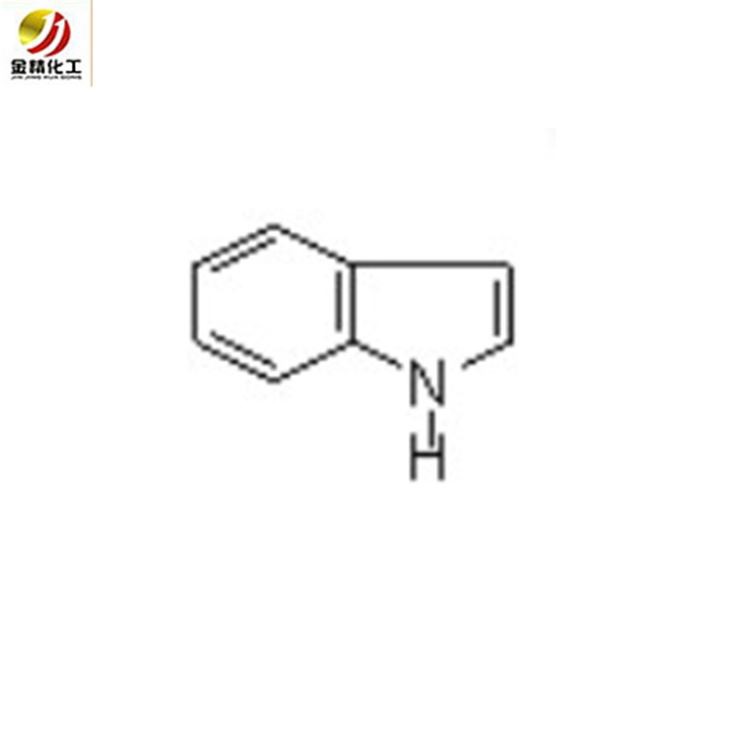
1H - indole, also commonly known as indole, is a heterocyclic aromatic organic compound with the chemical formula C₈H₇N. It has a bicyclic structure consisting of a six - membered benzene ring fused to a five - membered pyrrole ring. Indole is an important compound in the fields of chemistry, biology, and medicine.
The melting point of 1H - indole is approximately 52 - 54 °C (126 - 129 °F). This value can vary slightly depending on the purity of the compound. Pure substances generally have a sharp melting point, while impurities can lower and broaden the melting range. When 1H - indole is highly pure, it will melt within a narrow temperature range close to the reported values.
The melting point is a crucial physical property for several reasons. Firstly, it serves as a key parameter for identifying a compound. If you have a sample that is supposed to be 1H - indole, measuring its melting point can help confirm its identity. A significant deviation from the known melting point range may indicate the presence of impurities or that the sample is not 1H - indole at all.
Secondly, the melting point is related to the intermolecular forces within the compound. In the case of 1H - indole, the molecules are held together by a combination of van der Waals forces and hydrogen bonding. The relatively low melting point compared to some other aromatic compounds suggests that these intermolecular forces are not extremely strong. The planar structure of 1H - indole allows for some degree of stacking, which contributes to the intermolecular attractions, but the hydrogen bonding is not as extensive as in some compounds with more polar functional groups.
In industrial applications, knowledge of the melting point is essential for processes such as purification, crystallization, and formulation. For example, if you are using 1H - indole in a chemical synthesis where it needs to be in a liquid state, you need to heat it above its melting point. On the other hand, during purification by crystallization, cooling the solution below the melting point can cause 1H - indole to crystallize out, separating it from impurities.
As a supplier of 1H - indole, we ensure that our product meets high - quality standards. Our [97% 1h - indole Cas No 120 - 72 - 9]( /indole/97 - 1h - indole - 120 - 72 - 9 - cas - no.html) has a melting point that is very close to the theoretical value. We conduct rigorous quality control tests to guarantee the purity and consistency of our product.
1H - indole has a wide range of applications. It is used as an intermediate in the synthesis of various chemicals. For instance, it is an important precursor in the production of [Indole Acetic Acid Intermediates CAS 120 - 72 - 9 Indole]( /indole/indole - acetic - acid - intermediates - cas - 120 - 72 - 9.html). Indole - 3 - acetic acid (IAA) is a natural plant hormone, and 1H - indole is used in its synthesis. In the fragrance industry, [Indole C8H7N]( /indole/indole - c8h7n.html) is used to add a floral and animalic note to perfumes. At low concentrations, it has a pleasant smell, while at high concentrations, it can have a fecal odor.
In the pharmaceutical field, indole derivatives have shown a variety of biological activities, including anti - inflammatory, anti - cancer, and anti - microbial properties. Scientists are constantly exploring new indole - based drugs, and the availability of high - quality 1H - indole is crucial for these research and development efforts.
When handling 1H - indole, it is important to take appropriate safety precautions. Although it is not extremely toxic, it can cause irritation to the skin, eyes, and respiratory tract. It should be stored in a cool, dry place away from sources of ignition as it is flammable.
As a reliable supplier of 1H - indole, we are committed to providing our customers with the best - quality product. Our team of experts ensures that every batch of 1H - indole meets the highest standards of purity and quality. We understand the importance of this compound in various industries and are dedicated to supporting our customers' needs.
If you are in need of 1H - indole for your research, production, or other applications, we invite you to contact us for procurement and further discussions. We can provide you with detailed product information, samples, and competitive pricing. Whether you are a small - scale researcher or a large - scale industrial manufacturer, we have the capacity to meet your requirements.
References
- "The Merck Index: An Encyclopedia of Chemicals, Drugs, and Biologicals", Merck & Co., Inc.
- Journal of Organic Chemistry, various issues related to indole synthesis and properties.
- Industrial Organic Chemistry, by Klaus Weissermel and Hans - Jürgen Arpe.