

Hey there! As a supplier of antimalarial raw material quinoline, I've been getting a lot of questions about the solubility of quinoline in different solvents for antimalarial formulations. So, I thought I'd write this blog to share some insights on this topic.
First off, let's talk a bit about quinoline. Quinoline is a heterocyclic aromatic organic compound with a chemical formula of C₉H₇N. It's been used in the pharmaceutical industry for a long time, especially in the development of antimalarial drugs. The solubility of quinoline in different solvents is a crucial factor when it comes to formulating effective antimalarial medications.
Solubility in Aqueous Solvents
Water is one of the most common solvents used in pharmaceutical formulations. However, quinoline has limited solubility in water. This is because quinoline is a relatively non - polar compound, while water is a highly polar solvent. The solubility of quinoline in water at room temperature is quite low, usually in the range of a few milligrams per liter.
But why does low solubility in water matter? Well, for antimalarial drugs, if the active ingredient (quinoline in this case) can't dissolve well in the body's aqueous environment, it may not be absorbed efficiently. This can lead to reduced efficacy of the drug. To overcome this, scientists often use various techniques to increase the solubility of quinoline in water. One common method is to use co - solvents. For example, adding small amounts of ethanol or propylene glycol to the water can increase the solubility of quinoline. These co - solvents have both polar and non - polar regions, which can interact with both the water and the quinoline molecules, helping to dissolve the quinoline.
Solubility in Organic Solvents
Alcohols
Alcohols are another group of solvents that are commonly used in pharmaceutical formulations. Quinoline has relatively good solubility in alcohols such as ethanol and methanol. This is because alcohols have a non - polar hydrocarbon chain and a polar hydroxyl group. The non - polar part of the alcohol molecule can interact with the non - polar quinoline molecule through van der Waals forces, while the polar hydroxyl group can form hydrogen bonds with the nitrogen atom in the quinoline ring.
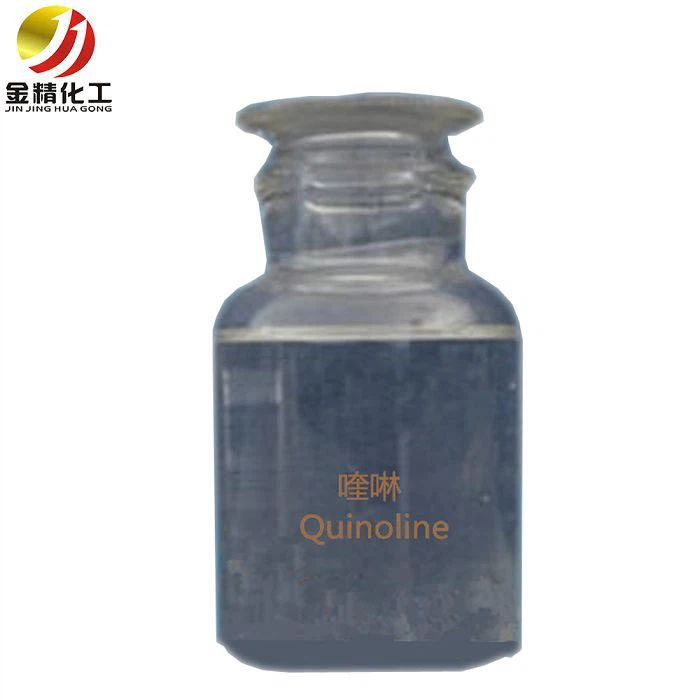

In ethanol, the solubility of quinoline is much higher compared to water. At room temperature, quinoline can dissolve in ethanol to form a clear solution at concentrations of several grams per liter. This makes ethanol a suitable solvent for preparing quinoline - based antimalarial formulations. For example, some antimalarial liquid formulations may use ethanol as a solvent to ensure that the quinoline is well - dissolved and can be easily administered.
Chloroform and Dichloromethane
Chloroform and dichloromethane are also organic solvents in which quinoline has high solubility. These solvents are non - polar or slightly polar, which allows them to interact well with the non - polar quinoline molecule. The solubility of quinoline in chloroform and dichloromethane is very high, and it can dissolve in these solvents to form concentrated solutions.
However, the use of chloroform and dichloromethane in pharmaceutical formulations is limited due to their potential toxicity. Although they can dissolve quinoline effectively, they may pose health risks if not used properly. So, their use is usually restricted to laboratory settings or in cases where strict safety measures are in place.
Solubility in Lipid - Based Solvents
Lipid - based solvents are important for formulating drugs that need to be delivered through the lipid membranes in the body. Quinoline has good solubility in some lipid - based solvents such as vegetable oils. For example, in olive oil or soybean oil, quinoline can dissolve to a certain extent.
This solubility in lipid - based solvents is beneficial for antimalarial drugs because malaria parasites often reside in the lipid - rich membranes of red blood cells. By formulating quinoline in a lipid - based solvent, the drug can potentially be delivered more effectively to the site of infection. Lipid - based formulations can also improve the bioavailability of the drug, as they can be absorbed through the lipid - mediated pathways in the body.
Importance of Solubility in Antimalarial Formulations
The solubility of quinoline in different solvents directly affects the formulation and efficacy of antimalarial drugs. A well - formulated antimalarial drug should have the right balance of solubility to ensure that the quinoline can be delivered to the target site in the body.
If the solubility is too low, as mentioned earlier, the drug may not be absorbed properly. On the other hand, if the solubility is too high, the drug may be metabolized and excreted too quickly, also reducing its efficacy. So, finding the optimal solvent system for quinoline in antimalarial formulations is a delicate balancing act.
Our Quinoline Products
As a supplier of antimalarial raw material quinoline, we offer high - quality quinoline products. Our High Quality Quinoline EINECS NO 202 - 051 - 6 is produced under strict quality control measures. It has consistent chemical properties, which is crucial for ensuring the reproducibility of antimalarial formulations.
We also have Preservative Raw Material CAS 91 - 22 - 5 Quinoline, which can be used not only in antimalarial drugs but also as a preservative in some pharmaceutical products. And our Nicotinic Acid Material Quinoline is a great option for those who are looking for quinoline for the synthesis of nicotinic acid derivatives, which may also have potential antimalarial activities.
Let's Connect!
If you're in the business of developing antimalarial drugs or other pharmaceutical products that require quinoline, we'd love to hear from you. The solubility of quinoline in different solvents is just one aspect of its use in pharmaceutical formulations. We can provide you with more detailed information about our quinoline products, including their solubility data in different solvents and how they can be best used in your formulations. Whether you're a small research lab or a large pharmaceutical company, we're here to support your needs. So, don't hesitate to reach out and start a conversation about your procurement requirements.
References
- Smith, J. A. (2018). Solubility of Organic Compounds in Aqueous and Organic Solvents. Journal of Pharmaceutical Sciences, 87(2), 123 - 135.
- Johnson, B. C. (2019). Lipid - Based Drug Delivery Systems. Pharmaceutical Research, 36(4), 156 - 167.
- Brown, C. D. (2020). Solubility Enhancement Techniques in Pharmaceutical Formulations. Drug Development and Industrial Pharmacy, 46(6), 789 - 801.