

As a supplier of Dibenzofuran (C₁₂H₈O), I've had the privilege of delving deep into the fascinating world of this compound. Dibenzofuran is a polycyclic aromatic compound with a unique structure and a wide range of applications. One area that has captured my attention is its ability to form complexes with metal ions. In this blog post, I'll explore the structure of these complexes and their potential implications.
Understanding Dibenzofuran
Before we dive into the complexes, let's take a moment to understand the structure of dibenzofuran itself. Dibenzofuran consists of two benzene rings fused to a central furan ring. This arrangement gives it a planar, rigid structure with a high degree of conjugation. The oxygen atom in the furan ring has two lone pairs of electrons, which can act as Lewis bases and interact with metal ions.
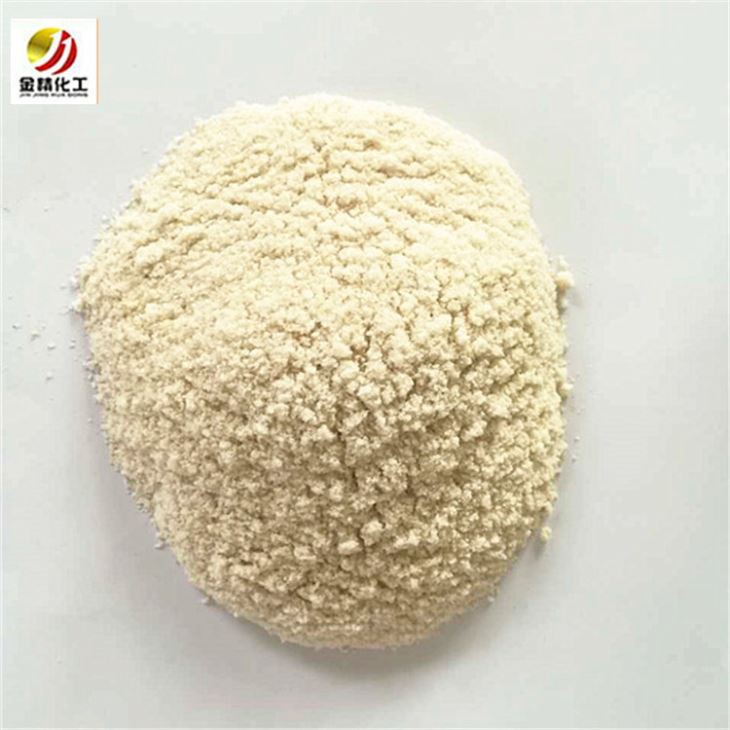
Dibenzofuran is a white crystalline solid with a melting point of around 82 - 83 °C. It is sparingly soluble in water but soluble in organic solvents such as ethanol, benzene, and chloroform. You can find high - quality white crystall Dibenzofuran with CAS 132 - 64 - 9 and EC 205 - 071 - 3 on our website White Crystall CAS 132 - 64 - 9 Dibenzofuran EC 205 - 071 - 3.
Formation of Complexes with Metal Ions
The ability of dibenzofuran to form complexes with metal ions is primarily due to the lone pairs of electrons on the oxygen atom. When a metal ion approaches dibenzofuran, the lone pairs can donate electron density to the metal ion, forming a coordinate covalent bond. This interaction is similar to the way ligands bind to metal centers in coordination compounds.
The nature of the metal ion plays a crucial role in determining the structure and stability of the complex. Different metal ions have different charges, sizes, and electronic configurations, which can influence the strength and geometry of the metal - ligand bond. For example, transition metal ions such as copper(II), nickel(II), and zinc(II) are known to form stable complexes with dibenzofuran.
Structures of Dibenzofuran - Metal Ion Complexes
The structure of dibenzofuran - metal ion complexes can vary depending on several factors, including the stoichiometry of the complex, the coordination number of the metal ion, and the nature of the counter - ions present.
Monodentate Coordination
In some cases, dibenzofuran can act as a monodentate ligand, meaning that it binds to the metal ion through only one of its lone pairs on the oxygen atom. This type of coordination typically results in a simple 1:1 complex between the metal ion and dibenzofuran. The metal ion may have additional ligands in its coordination sphere to satisfy its coordination number. For example, if the metal ion has a coordination number of 4, it may have three other ligands in addition to dibenzofuran.
Bidentate Coordination
Under certain conditions, dibenzofuran can act as a bidentate ligand. This occurs when both lone pairs on the oxygen atom interact with the metal ion simultaneously. Bidentate coordination can lead to the formation of more stable complexes, as the metal - ligand interaction is stronger due to the chelate effect. In a bidentate complex, the metal ion is often in a five - or six - membered ring formed by the dibenzofuran ligand.
Higher - Order Complexes
In addition to 1:1 complexes, dibenzofuran can also form higher - order complexes with metal ions. For example, in the presence of excess dibenzofuran, a 1:2 or 1:3 complex may form, where two or three dibenzofuran molecules are coordinated to a single metal ion. The structure of these higher - order complexes can be more complex, with multiple ligands arranged around the metal ion in a specific geometry.
Factors Affecting Complex Structure
Several factors can influence the structure of dibenzofuran - metal ion complexes:
Solvent Effects
The solvent in which the complex is formed can have a significant impact on its structure. Different solvents have different polarities and solvation abilities, which can affect the solubility of the complex and the strength of the metal - ligand interaction. For example, in a polar solvent, the metal ion may be more solvated, which can compete with dibenzofuran for coordination sites on the metal ion.
pH
The pH of the solution can also affect the formation and structure of the complex. At low pH, the oxygen atom in dibenzofuran may be protonated, reducing its ability to act as a ligand. On the other hand, at high pH, the metal ion may form hydroxide complexes, which can interfere with the formation of the dibenzofuran - metal ion complex.
Temperature
Temperature can influence the rate of complex formation and the stability of the complex. Higher temperatures generally increase the rate of reaction but may also decrease the stability of the complex due to increased molecular motion.
Applications of Dibenzofuran - Metal Ion Complexes
The complexes formed by dibenzofuran and metal ions have several potential applications:

Catalysis
Some dibenzofuran - metal ion complexes can act as catalysts in chemical reactions. The metal center in the complex can activate reactant molecules and facilitate chemical transformations. For example, they may be used in oxidation, reduction, or coupling reactions.
Sensors
Dibenzofuran - metal ion complexes can be used as sensors for detecting metal ions in solution. The formation of the complex can cause a change in the optical or electrochemical properties of the system, which can be measured to determine the concentration of the metal ion.
Medicinal Chemistry
In medicinal chemistry, these complexes may have potential applications as drugs or drug delivery agents. The metal ion can interact with biological molecules in a specific way, and the dibenzofuran ligand can modify the pharmacokinetic and pharmacodynamic properties of the complex.
Our Offerings as a Dibenzofuran Supplier
As a leading supplier of dibenzofuran, we offer high - quality products for various applications. Our dibenzofuran is not only used in the study of metal - ion complexes but also has other important uses. It is used as a sheet liver flukes drug and as a veterinary drug material. You can learn more about these applications on our website Sheet Liver Flukes Drug Dibenzofuran EC205 - 071 - 3 and Veterinary Drug Material Dibenzofuran EC205 - 071 - 3.
We are committed to providing our customers with the best products and services. If you are interested in purchasing dibenzofuran for your research on metal - ion complexes or for other applications, please feel free to contact us for more information and to start a procurement discussion. Our team of experts is ready to assist you in finding the right product and answering any questions you may have.
References
- Cotton, F. A., Wilkinson, G., Murillo, C. A., & Bochmann, M. (1999). Advanced Inorganic Chemistry (6th ed.). Wiley.
- Huheey, J. E., Keiter, E. A., & Keiter, R. L. (1993). Inorganic Chemistry: Principles of Structure and Reactivity (4th ed.). HarperCollins.
- Lehn, J. - M. (1995). Supramolecular Chemistry: Concepts and Perspectives. VCH.