

Hey there! As a supplier of Pyridine-2,3-dicarboxylic Acid, I often get asked about how this compound reacts with alcohols. So, I thought I'd share some insights on this topic in today's blog post.
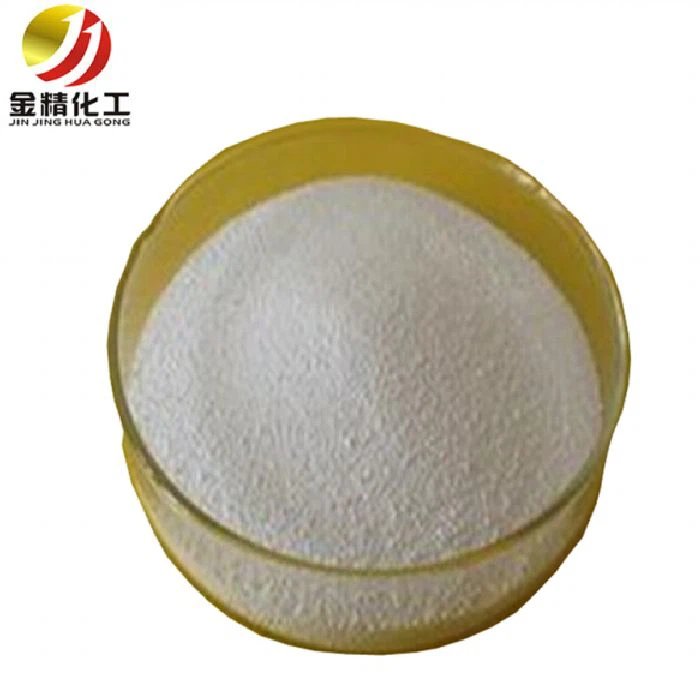

First off, let's talk a bit about Pyridine-2,3-dicarboxylic Acid itself. Also known as Quinolinic Acid C7H5NO4 or 2,3-Pyridinedicarboxylic Acid, it's a white powder with the CAS NO 89-00-9, like White Powder Quinolinic Acid CAS NO 89-00-9. This acid has two carboxylic acid groups (-COOH) on the pyridine ring, which makes it quite reactive, especially when it comes to reactions with alcohols.
Esterification Reaction
The most common reaction between Pyridine-2,3-dicarboxylic Acid and alcohols is the esterification reaction. Esterification is a process where an acid and an alcohol react to form an ester and water. In the case of Pyridine-2,3-dicarboxylic Acid, each of the two carboxylic acid groups can potentially react with an alcohol molecule.
The general equation for the esterification of a carboxylic acid (R-COOH) with an alcohol (R'-OH) is:
R-COOH + R'-OH ⇌ R-COOR' + H₂O
For Pyridine-2,3-dicarboxylic Acid, if we represent it as C₅H₃N(COOH)₂ and the alcohol as ROH, the reaction can be written as:
C₅H₃N(COOH)₂ + 2ROH ⇌ C₅H₃N(COOR)₂ + 2H₂O
This reaction is typically catalyzed by an acid, such as sulfuric acid (H₂SO₄). The acid catalyst helps to protonate the carbonyl oxygen of the carboxylic acid group, making it more electrophilic and thus more reactive towards the nucleophilic attack by the alcohol.
The reaction conditions for esterification are usually refluxing the mixture of the acid and the alcohol in the presence of the acid catalyst for a certain period of time. The refluxing helps to increase the reaction rate by maintaining a constant temperature and allowing the reaction to proceed to equilibrium. However, since esterification is an equilibrium reaction, the yield of the ester can be improved by removing the water formed during the reaction. This can be done by using a Dean - Stark apparatus, which allows the water to be continuously removed from the reaction mixture.
Mechanism of Esterification
The mechanism of the esterification reaction between Pyridine-2,3-dicarboxylic Acid and alcohols involves several steps:
- Protonation of the Carbonyl Oxygen: The acid catalyst donates a proton to the carbonyl oxygen of the carboxylic acid group, making the carbonyl carbon more electrophilic.
- Nucleophilic Attack by the Alcohol: The lone pair of electrons on the oxygen atom of the alcohol attacks the electrophilic carbonyl carbon, forming a tetrahedral intermediate.
- Elimination of Water: A proton is transferred from one of the hydroxyl groups in the tetrahedral intermediate to another oxygen atom, followed by the elimination of a water molecule, reforming the carbonyl group and generating the ester.
Factors Affecting the Reaction
Several factors can affect the reaction between Pyridine-2,3-dicarboxylic Acid and alcohols:
- Nature of the Alcohol: The reactivity of the alcohol depends on its structure. Primary alcohols are generally more reactive than secondary and tertiary alcohols due to less steric hindrance. For example, methanol (CH₃OH) reacts more readily than tert - butanol ((CH₃)₃COH).
- Temperature: Increasing the temperature usually increases the reaction rate. However, too high a temperature may cause side reactions or decomposition of the reactants or products.
- Concentration of Reactants: Higher concentrations of the acid and the alcohol generally lead to a higher reaction rate and a higher yield of the ester, according to Le Chatelier's principle.
- Catalyst Concentration: The concentration of the acid catalyst also affects the reaction rate. A higher concentration of the catalyst can increase the rate of protonation and thus speed up the reaction.
Applications of the Ester Products
The esters formed from the reaction of Pyridine-2,3-dicarboxylic Acid and alcohols have various applications. They can be used as intermediates in the synthesis of pharmaceuticals, agrochemicals, and other fine chemicals. For example, some pyridine-based esters have shown biological activities such as antibacterial and antifungal properties.
Other Possible Reactions
In addition to esterification, there might be other reactions between Pyridine-2,3-dicarboxylic Acid and alcohols under different reaction conditions. For instance, in the presence of a strong base, the acid can be deprotonated to form a carboxylate anion, which may then react with the alcohol in a different way. However, these reactions are less common compared to the esterification reaction.
Conclusion
So, in a nutshell, Pyridine-2,3-dicarboxylic Acid reacts with alcohols mainly through the esterification reaction to form esters and water. The reaction is influenced by factors such as the nature of the alcohol, temperature, concentration of reactants, and catalyst concentration. The esters formed have potential applications in various industries.
If you're interested in purchasing Pyridine-2,3-dicarboxylic Acid for your research or production needs, feel free to get in touch with us for more information and to start a procurement discussion. We're here to provide you with high - quality products and excellent service.
References
- March, J. Advanced Organic Chemistry: Reactions, Mechanisms, and Structure. Wiley, 2007.
- Carey, F. A., & Sundberg, R. J. Advanced Organic Chemistry Part A: Structure and Mechanisms. Springer, 2007.